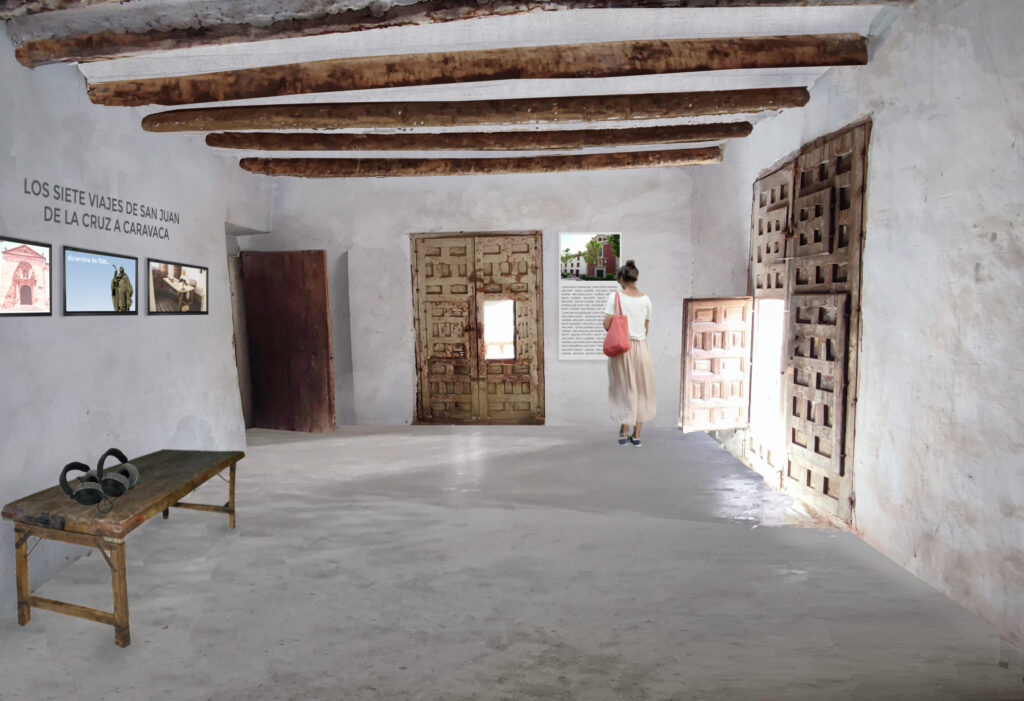

Project: Francisco Sandoval Gómez and Javier Guerrero Brotons. Project management: Javier Guerrero -project architect- and Severiano Arias -construction manager and health and safety coordinator-
This building of humble origin is located in the Plaza del Templete in Caravaca de la Cruz (Murcia) and according to oral tradition was the dwelling that Saint John of the Cross inhabited during his travels to the town for the foundation of the Discalced Carmelite convent. Historical documentation indicates that the mystic saint rented "a small house from some Moriscos" in 1586 near the church of the Purísima Concepción.
The building
The property is catalogued in the General Urban Development Plan of Caravaca de la Cruz with grade 2: structural conservation. The catalogue sheet indicates the following in observations: "house where Saint John of the Cross lived". It has three floors and is a good example of humble residential architecture that has not undergone significant changes since the 18th century: the wooden paneled carpentry remains, as does the only cantilevered wooden balcony preserved in Caravaca de la Cruz. The following images show the state of the building's interior in 2021:
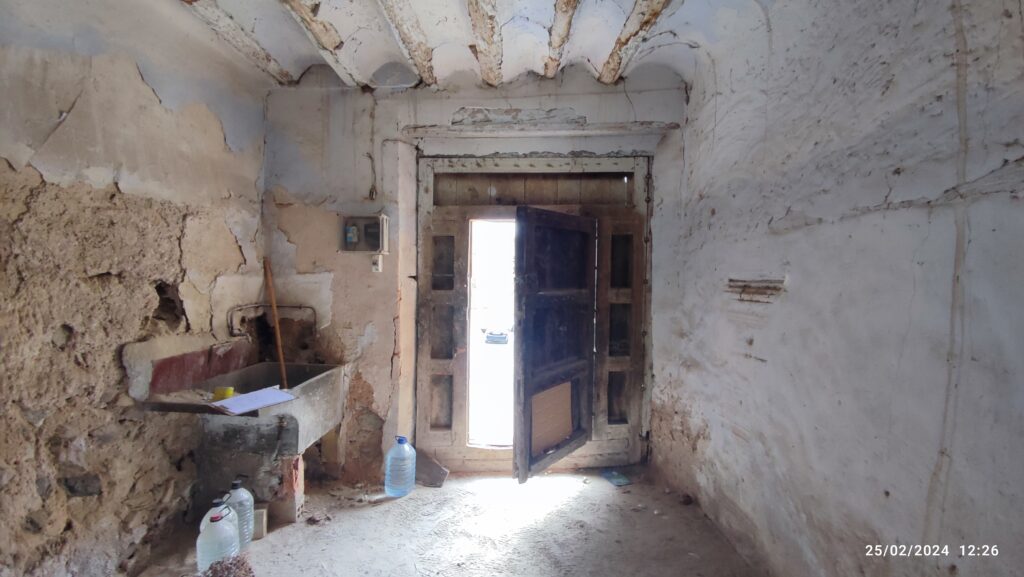
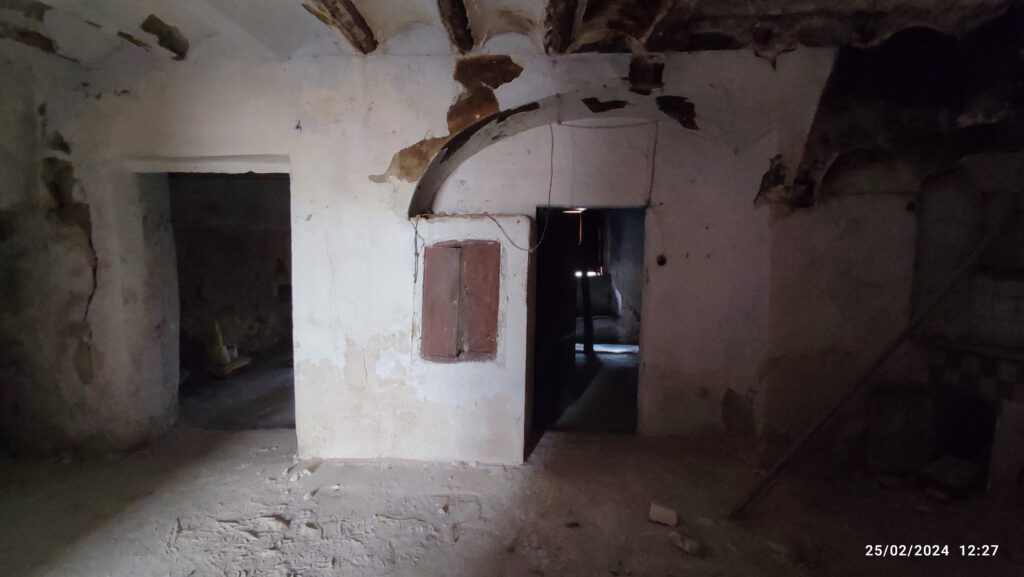
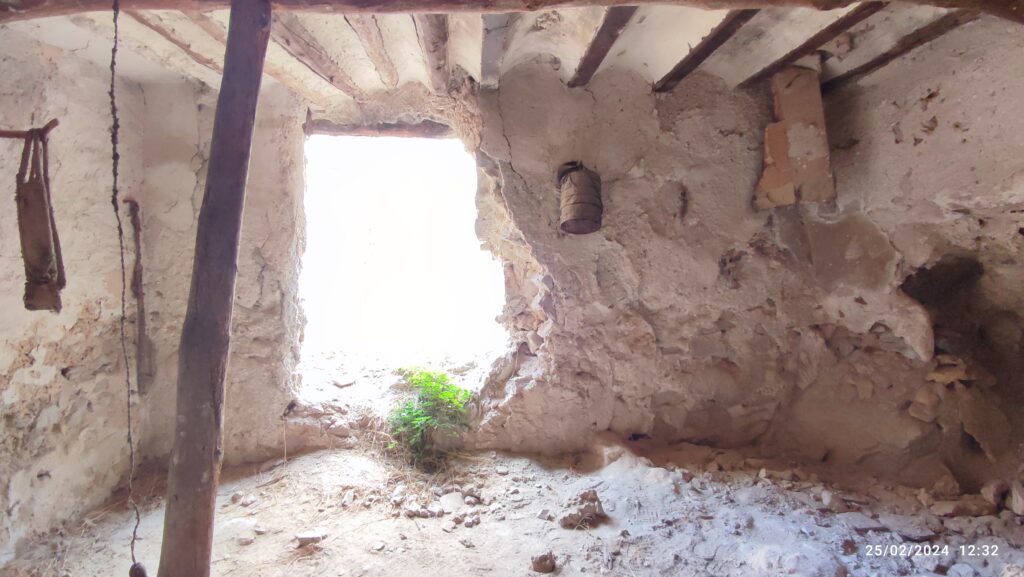
The intervention
In 2020 the facades and roof were intervened upon, but the interior was in very poor condition. In 2021 the project began to rehabilitate the property and convert it into the Casa Museo de San Juan de la Cruz in Caravaca. The criteria applied were maximum respect for the building's interior and its historical and cultural values, and the use of low environmental impact techniques and materials.
The program established by the Conde Santa Ana de las Torres Foundation, owner of the building, consisted of reproducing the historical and ethnographic values of the property on the ground floor, creating exhibition rooms on the first floor to bring Saint John of the Cross's life and his relationship with Caravaca closer to visitors, and a library and meditation room on the top floor. To carry this out, a new-build volume was erected next to the courtyard to house the elevator, evacuation staircase and restrooms, so that the historic building would have minimal impact from new installations.
Thus, on the ground floor there is a small office outside the museum route and the rest of the space recreates a humble 16th century dwelling. For this purpose, it was proposed to recover the fireplace and provide appropriate furniture in the main room. In the space where animals were kept, half of the floor was left as earth, unpaved, just as it had remained to this day. The original staircase follows the model of a humble dwelling in the area: located on one side behind a partition wall and made entirely of plaster, a finish that was respected in the project, as a new staircase in the additional volume would be the one leading to the upper floors.
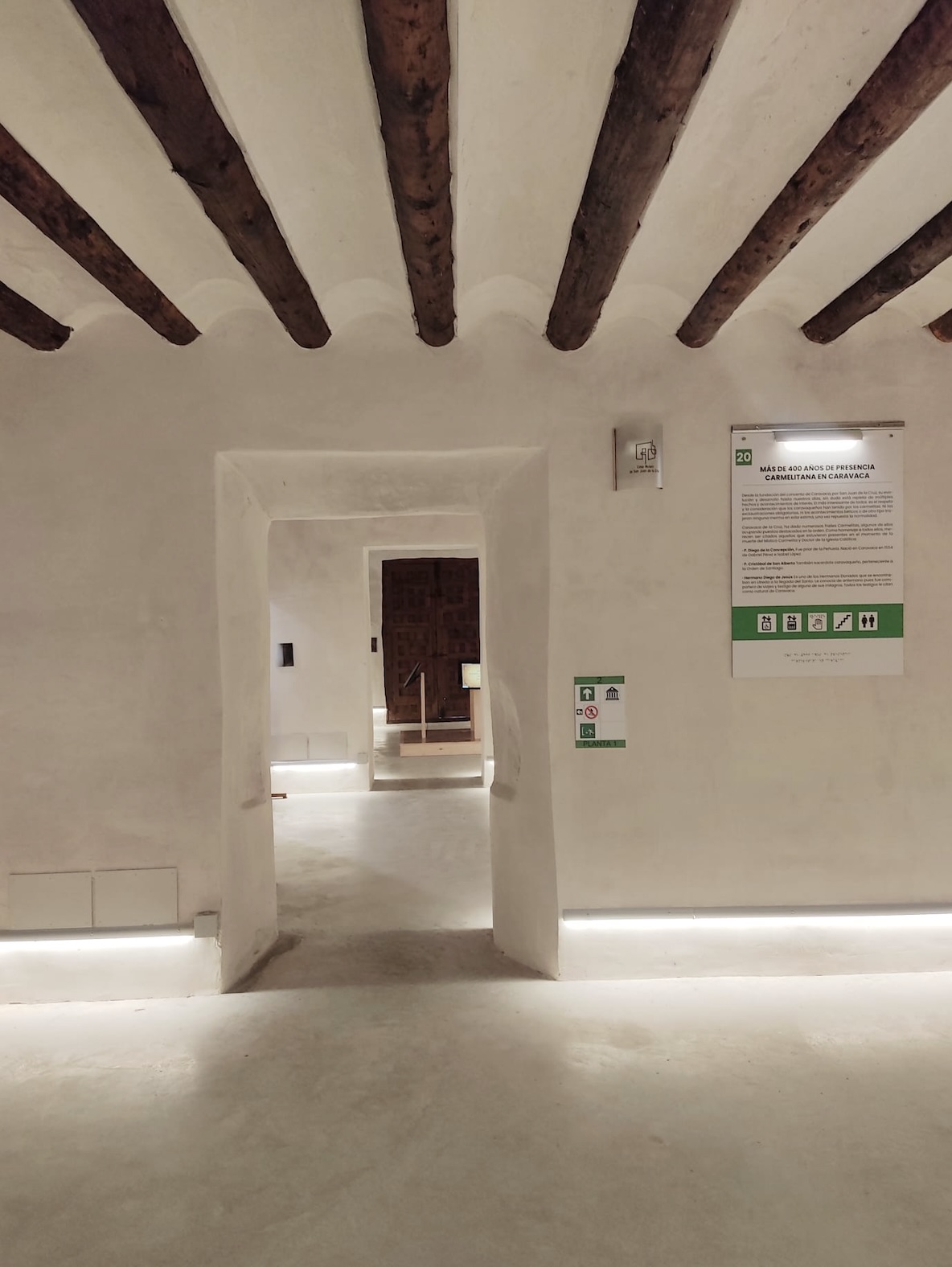
An opening was made in the wall separating the first from the second bay and in the one separating the second from the third bay an old opening that had been blocked up was utilized so that a clear and unobstructed route could be guaranteed for people with reduced mobility.
A fundamental issue emphasized in the project was respect for the original fabric, with its irregularities and changing geometry, so that corner guards and profiled edges were avoided. The wall finishes on the ground floor are lime mortar and on the upper floors plaster. In short, the aim was to preserve the essence of the property.
On the other hand, the beams were so deteriorated and with evident signs of rot that they were not salvageable. Therefore, a new floor structure of round timbers and plaster vaults was designed, the traditional technique with which they had been made long ago and which has endured for centuries in humble dwellings. This posed a great challenge, as the construction company had not executed this system and initially resorted to concrete vault blocks. However, advice was provided to the project management to guide the execution of the floor structures according to the project and the planned traditional techniques.
I must thank the technical architect Pedro Antonio Robles, who shared his experience with a formwork system based on reusable PVC on which the plaster for the joist spaces was poured. In this way, not only could the floor structures be made according to traditional techniques, but the construction company also "re-learned" the ancient way of building which is much more sustainable.
In the gallery below you can see three images: 1. The state of the beams / 2. Concrete vault blocks placed by the construction company / 3. PVC formwork already in place after removing the concrete vault blocks / 4. Floor structure with plaster already poured, note the PVC formwork in the background where plaster has not yet been poured. All images are my own. You can appreciate between photos 2 and 3 the different curvature of one solution and the other, that is, with the concrete vault blocks the floor structure would have resulted in a greater depth and, therefore, greater weight.
As for the new-build volume, it was designed with simplicity to be respectful of the historic building. A new facade needed to be created on the Cuesta de la Cruz between party walls: on one side, the historic dwelling, on the other, a contemporary residential building of much greater height. A white facade was designed based on lime mortar that would be neutral in its environment, without any openings as the interior services, which opened onto the courtyard, did not require them. The triple-row tile cornice of the historic building was reproduced to provide compositional unity, so that the new volume differs from the pre-existing one in the facade color but facilitates understanding of the whole as a unit through the upper finish. This is of great importance as the tile brick present in many cornices restored in recent decades is not documented in any building prior to the 18th century, while humble constructions up to the 20th century in the area were mostly made only with curved tiles. No additional element or ornament was added to the facade panel so that the Foundation itself has the opportunity in the future to treat it according to its needs and can place any signage identifying the Casa Museo de San Juan de la Cruz without affecting the walls of the historic house.